
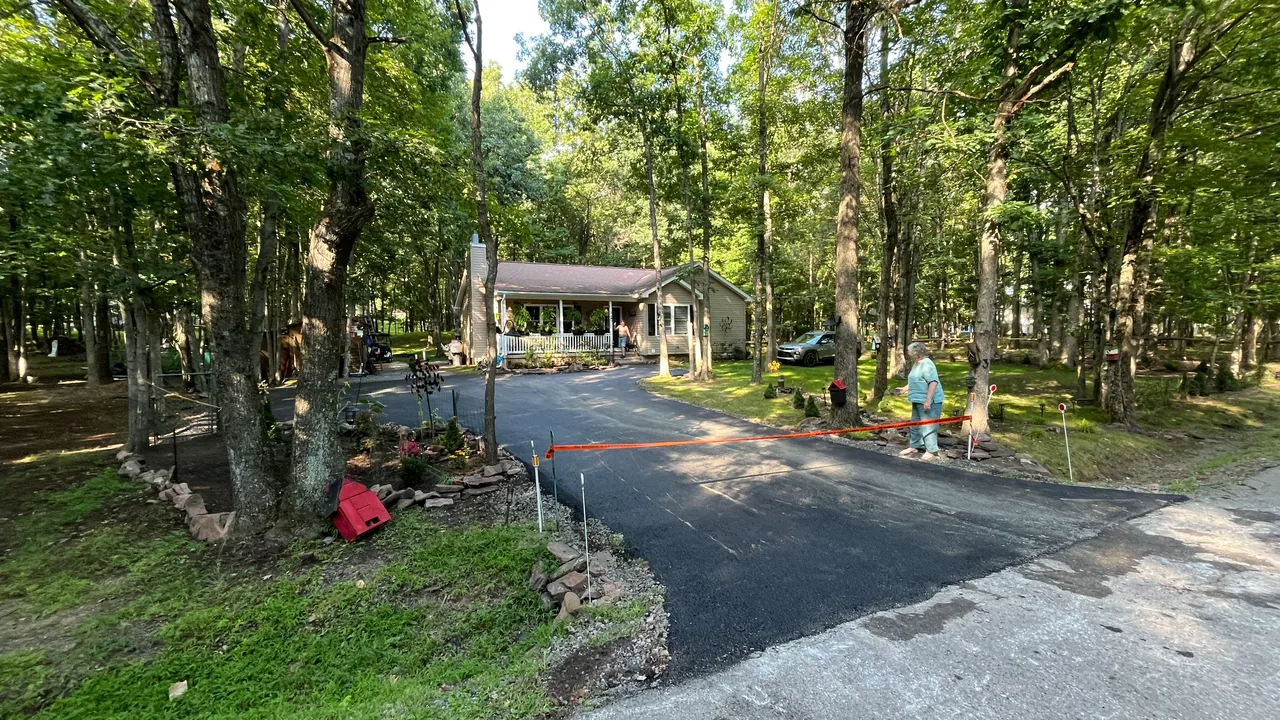
When Should You Sealcoat an Asphalt Driveway in Pennsylvania?
Let new asphalt cure for at least a few months, then sealcoat it when the surface starts to show wear. A well-built driveway should not need its first coat for about 2 to 5 years. After that, plan on a fresh coat every 2 to 5 years. Small cracks and loose stone move that date up.
In Pennsylvania, the coat goes on in warm, dry weather. Around Lehighton, normal daytime highs reach 70 degrees or more from May through September. Winters swing above and below freezing over and over, and that is hard on asphalt with water in its cracks. When yours is ready, driveway sealcoating protects the surface before the next winter.
What do the published sources say about sealcoat timing?
| Question | Published guidance | Kind of source |
|---|---|---|
| Cure time for new hot mix asphalt | Usually 30 to 90 days | Sealcoating trade council |
| Cure time for cold mix asphalt | At least 90 days | Sealcoating trade council |
| Earliest first coat | Once the driveway is at least several months old | Another state’s asphalt pavement association |
| Earliest first coat | Once the driveway is at least 6 months old | National cost guide |
| First coat on a well-built driveway | Not needed for about 2 to 5 years | Asphalt industry engineering institute |
| How often to reseal | Every 2 to 5 years | Another state’s asphalt pavement association |
| How often to reseal | Every 3 years in temperate climates, every other year in extreme heat or cold | National cost guide |
The guides count the time differently. Every one of them puts the cure first.
How long should new asphalt cure before its first sealcoat?
The sealcoating trade council says cure time varies with the type of asphalt and the stone in it. Weather and the way the pavement was built change it too. Hot mix asphalt usually cures in 30 to 90 days, and cold mix needs at least 90.
Other guides set a later start. Another state’s asphalt pavement association says to wait until a driveway is at least several months old. One national cost guide says 6 months, because sealer will not bond well to a younger surface.
The asphalt industry’s engineering institute takes the longest view. It says a well-built driveway should not need sealing for about 2 to 5 years. Climate and the quality of the original paving decide where in that range it lands.
Pennsylvania’s calendar adds a step. A driveway paved in the fall cures through months that are too cold for sealer. Its first coat waits for a warm season and for the first signs of wear. If asphalt driveway paving is on your list, ask about the first coat when you get the quote.
How often should you reseal a driveway in Pennsylvania?
The same pavement association says a good sealer every 2 to 5 years can extend a driveway’s service life. It also improves the look. One national cost guide splits it by climate. It says every 3 years in temperate climates, and every other year in extreme heat or cold.
The engineering institute ties each coat to wear you can see. It says to seal as soon as the first signs of wear show up. So the calendar gives a rough range, and the driveway itself sets the date.
Freeze and thaw swings come often around Lehighton. NOAA’s 1991 to 2020 climate normals for its Lehighton station count about 132 nights a year at or below freezing. Only about 24 days a year stay at or below freezing all day. That leaves more than 100 days a year that freeze at night and thaw by afternoon.
PennDOT explains why those swings matter. Water from melting snow or rain seeps into cracks, then freezes and expands when the temperature drops. PennDOT adds that more swings between warm and freezing bring more potholes.
A national cost guide says a repaired and sealed driveway keeps water out of its cracks through those cycles. In this climate, lean toward the short end of the range when small cracks appear.
What are the signs a driveway needs sealcoating?
Check for these each spring. Any of them can mean the surface is due, as long as the base under it is still solid.
- A dry, faded surface. The engineering institute says sealing renews old asphalt that has gone dry and brittle with age. Minnesota’s transportation department explains the cause. Sun and weather make asphalt oxidize and harden, which leaves it brittle and prone to cracking.
- Small cracks and pits. The institute says sealing closes small surface cracks and voids. The trade council’s prep steps leave hairline cracks alone. Cracks from about a quarter inch to three quarters of an inch wide get cleaned out and filled first.
- Loose stone on top. The institute calls this raveling, the loss of stone from the surface. Sealing slows it down.
- Oil and gas spots. The trade council says sealcoat protects pavement from leaking oil and gasoline. Its prep steps scrub oil spots before the coat, and deeper spots get a primer.
When is a driveway past what sealcoating can fix?
Sealer protects asphalt that is still sound underneath. The trade council says wide cracks and soft or sunken spots mean the pavement or its base needs repair. The same goes for extensive alligator cracking, a web of small connected cracks.
Those spots need asphalt patching and repair before any coat goes down. The council also says large patches should cure before they are sealed.
When wear covers most of the driveway, ask about asphalt resurfacing instead. The same pavement association guide says old driveways can take a new overlay once weak spots and holes are patched.
What weather does sealcoating need around Lehighton?
Sealer dries and hardens as its water evaporates in the sun’s heat. The trade council wants the air at 50 degrees and rising, and the pavement at 60 and rising. It rules out work in cold or wet weather, or when rain is likely. Ideal days run above 70 degrees, with direct sun and humidity under 60 percent.
NOAA’s 1991 to 2020 normals for the Lehighton station show when those days arrive. Temperatures are in degrees Fahrenheit.
| Month | Normal high | Normal low | Days reaching 70 or warmer |
|---|---|---|---|
| April | 60.9 | 38.0 | 5.4 |
| May | 70.5 | 48.3 | 16.7 |
| June | 77.6 | 57.1 | 26.0 |
| July | 81.7 | 62.4 | 30.7 |
| August | 79.8 | 60.0 | 30.5 |
| September | 73.3 | 52.7 | 21.8 |
| October | 61.6 | 41.1 | 5.5 |
May through September is the main window. April and October each average only about 5 days that reach 70. The median last spring freeze falls around April 21, and the first fall freeze around October 23.
Rain matters in fall too. September is the wettest month at the Lehighton station, with about 5.6 inches in a normal year. On cloudy, humid days, the council says a coat can need up to 24 hours to dry enough for rain.
When is your driveway ready for sealcoating?
Look your driveway over each spring once the thaw is done. A faded surface with small cracks or loose stone is ready for a coat. Soft spots and potholes need repair first.
NS Paving and Landscaping offers sealcoating for home driveways and business lots, including latex commercial sealcoating. We work across Carbon, Monroe and the surrounding counties. Read more about sealcoating for driveways and commercial lots, or call or text (484) 545-5072 for a free estimate. We look at the surface and put the quote in writing.